
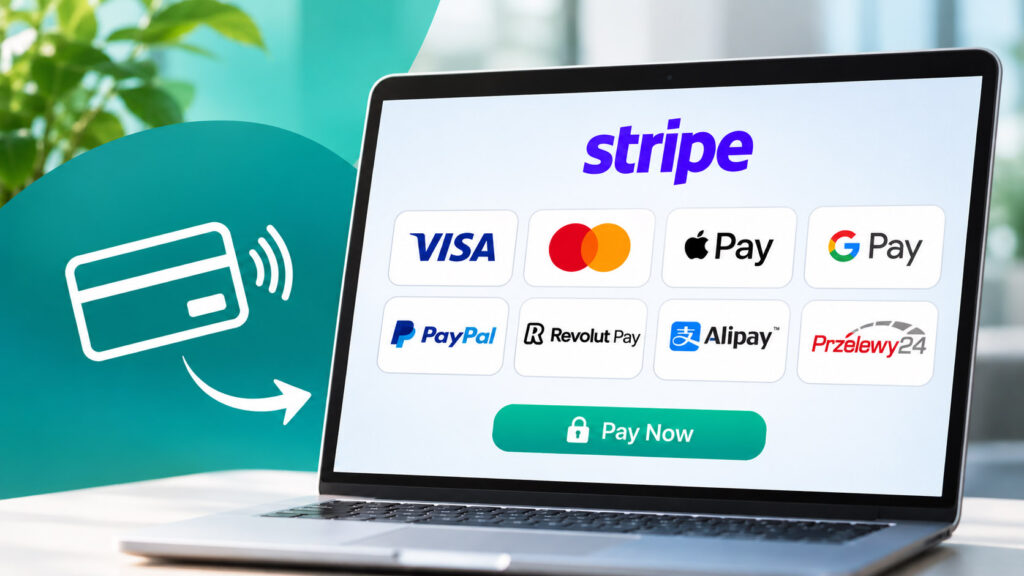
Paying online no longer means entering a credit card number. From digital wallets and instant bank payments to buy now, pay later services and local cash-based options, customers can choose from a growing range of ways to pay. These options are commonly known as alternative payment methods (APMs). Understanding how they work can help businesses build a more convenient checkout for customers in different markets.
This guide explains the major types of alternative payment methods, their advantages and limitations, regional differences, and how payment platforms such as Stripe can help businesses support them. If you are new to online payments, start with our beginner’s guide to Stripe and online payments.
What Are Alternative Payment Methods (APMs)?
Alternative payment methods are ways to pay that go beyond a conventional card-payment flow. Depending on the context, the term may include digital wallets, account-to-account bank transfers, local bank-payment schemes, buy now, pay later (BNPL) services, and cash-based payment systems.
The distinction is not always strict. For example, a digital wallet may use a card behind the scenes, while a local bank-payment method may transfer money directly from a customer’s bank account. Both can provide a checkout experience that differs from manually entering card details.
For a merchant, the important question is not simply whether a payment option is considered “alternative.” It is whether the method is trusted by the intended customers, supported in the relevant market, and appropriate for the product or service being sold.
How Do Alternative Payment Methods Work?
The exact payment journey varies, but many APMs follow a familiar sequence: a customer chooses a method, authorizes the payment through a wallet, bank, or provider, and returns to the merchant’s checkout. Some payments confirm immediately; others remain pending until the provider sends a final status.
Consider a customer using a bank-based payment method. The checkout may redirect them to their bank, where they authenticate and approve the transaction. A digital wallet might instead display a biometric prompt on a phone. A cash-based method may generate a voucher that the customer pays later at an authorized location.
These differences matter operationally. A merchant should not assume that every payment method settles instantly, supports refunds in the same way, or has the same dispute process. A successful redirect back to the website is also not always proof of a completed payment; reliable integrations use provider-confirmed payment statuses.
The Main Types of Alternative Payment Methods
Understanding the major categories makes it easier to compare options without getting lost in individual brand names.
Digital Wallets
Wallets offer a streamlined way to authorize payments, often using a saved funding source and device-based authentication. Examples include Apple Pay, Google Pay, Alipay, and Revolut Pay. Their underlying funding mechanisms and regional availability differ.
Bank-Based Payments
These methods let customers authorize a payment through their bank or local banking network. Examples include iDEAL in the Netherlands, Bancontact in Belgium, and Przelewy24 in Poland. Customer experience and settlement arrangements vary by scheme.
Buy Now, Pay Later
BNPL services such as Klarna may let eligible customers pay later or split purchases into installments. Approval, repayment terms, fees, and consumer protections depend on the provider, market, and specific product.
Cash-Based and Voucher Payments
Some services allow customers to initiate a transaction online and complete it using cash or a voucher at a participating location. OXXO is a familiar example in Mexico. These payments often involve delayed confirmation.
Are Apple Pay and Google Pay Alternative Payment Methods?
They are frequently grouped with alternative or express payment methods because the customer uses a wallet interface instead of manually entering card details. However, the underlying transaction is commonly funded by a payment card. That is why payment providers and industry reports may classify wallets differently from bank-transfer APMs.
What About Cryptocurrency Payments?
Crypto-related payment products form another category, but they should not be treated as interchangeable with traditional APMs. Supported assets, conversion arrangements, regulatory requirements, refund handling, and merchant eligibility vary considerably. A crypto-related option shown in a payment platform’s documentation does not mean every merchant can enable it.
Popular Alternative Payment Methods Around the World
Payment preferences are local. A familiar checkout in one country may look unusual in another. Businesses serving international customers should therefore research the markets they actually sell to rather than copying a universal list of payment buttons.
Examples by Market and Payment Experience
- Netherlands — iDEAL: a widely recognized bank-based online payment experience.
- Belgium — Bancontact: a familiar local payment brand used for electronic and online purchases.
- Poland — Przelewy24: an online payment service associated with local bank-payment choices.
- Mexico — OXXO: a cash-voucher payment option for customers who prefer or need to pay in person.
- China and cross-border shoppers — Alipay: a wallet ecosystem familiar to many Chinese consumers.
- Italy — Satispay: a mobile payment option used in supported markets.
- Supported markets — Revolut Pay: a wallet-style checkout option for eligible Revolut users and merchants.
- Multiple markets — Klarna: payment options that may include pay-later or installment experiences, subject to eligibility.
Why Local Familiarity Matters
Imagine a European online business expanding into a new country. Customers may recognize the brand but still hesitate when the checkout offers only an unfamiliar way to pay. Presenting a trusted local method can remove one source of uncertainty. That does not guarantee a higher conversion rate, but it gives customers an option that better matches their expectations.
For cross-border sellers, localization also includes clear prices, understandable currency presentation, refund information, and a mobile-friendly checkout. Payment choice is one part of the overall experience.
Why Should Businesses Offer Multiple Payment Methods?
Offering a thoughtful selection of payment methods can make a checkout more inclusive and convenient. The goal is not to display as many logos as possible. It is to remove avoidable friction for the customers most likely to buy.
Meet Customer Preferences
Customers may prefer their everyday banking app, a familiar wallet, or a local payment brand over entering card information.
Support International Audiences
Regionally relevant methods can help a business adapt its checkout when entering new markets.
Improve Mobile Convenience
Compatible wallets can reduce manual data entry and simplify authorization on supported devices.
Provide More Accessible Choices
Bank-based or cash-based options may serve some customers who do not want to use a traditional credit card.
More Payment Methods Do Not Automatically Mean More Sales
There are trade-offs. Each method may have different processing fees, settlement timing, refund rules, reporting needs, or customer-support implications. A cluttered checkout can also make decisions harder. Businesses should assess the methods that matter to their audience and measure their impact.
It is also useful to distinguish payment choice from payment reliability. Declines, authentication problems, and technical errors can still occur. Our article on why online payments fail explains common causes and ways to understand them.
How Does Stripe Support Alternative Payment Methods?
Stripe provides payment infrastructure that can support cards, wallets, and a range of local payment methods through eligible products and integrations. Instead of independently building a connection to every provider, a business can use Stripe’s supported payment interfaces and APIs.
One important concept is dynamic payment method presentation. In compatible integrations, Stripe can determine which enabled methods are eligible for a particular transaction and present appropriate choices. The exact behavior depends on the Stripe product, account configuration, customer context, and integration.
No. A method may be enabled in an account but not eligible for a specific transaction. Customer location, currency, device, payment amount, merchant eligibility, and other requirements can affect which options appear.
Stripe Checkout and Payment Method Selection
Stripe Checkout is a prebuilt payment experience that can simplify the collection of payments. Depending on the implementation, it can display supported payment methods appropriate to the transaction without requiring the business to design every payment flow from scratch.
For a deeper introduction to hosted checkout pages, supported payment flows, and their benefits, read our separate guide to how Stripe Checkout works.
Automatic Does Not Mean Unlimited
Automatic presentation reduces manual decision-making, but it does not override regional restrictions, product limitations, or provider eligibility. Businesses should consult Stripe’s official payment methods documentation and test their actual checkout for relevant customer scenarios.
How to Choose the Right Alternative Payment Methods
A good payment strategy starts with customer needs rather than a feature checklist. Use these questions to narrow the options.
Where are your customers? Prioritize payment methods they recognize and can use in their country.
What are you selling? One-time purchases, donations, and recurring subscriptions may support different payment methods.
How do customers shop? Consider mobile usage, checkout devices, and the need for fast authorization.
How quickly must payment be confirmed? Delayed methods may not suit immediate digital fulfillment without additional status handling.
What are the total costs? Review processing fees, refund procedures, disputes, settlement, and operational work.
Can you measure the results? Monitor successful payments, abandonment, failures, and customer feedback.
A Practical Example: A Small International Service Business
Suppose a design consultant serves clients in several European countries. A sensible starting point might be cards and suitable digital wallets, followed by local bank-payment methods where the client base justifies them. If the consultant also bills clients monthly, recurring-payment compatibility becomes an additional requirement.
Not every APM supports recurring billing or off-session payments. For subscription-specific questions, see our explanation of Stripe Billing, subscriptions, and recurring payments.
Can You Offer Alternative Payment Methods in WordPress?
Yes. WordPress websites can accept online payments through integrations that connect a site to a payment processor such as Stripe. The right approach depends on whether you operate a full online store, sell a few services, collect donations, or simply need a payment page.
A large e-commerce platform is not always necessary for a straightforward payment use case. For example, a consultant collecting a one-time fee or a nonprofit accepting donations may prefer a focused payment form rather than a complete shopping-cart system.
Full E-Commerce Setup
Often appropriate for stores that need a product catalog, inventory management, shipping, taxes, and a shopping cart.
- Multiple products and variants
- Order management workflows
- Storefront and checkout features
Focused Stripe Payment Integration
Often appropriate when the primary goal is to accept a payment or donation directly on an existing WordPress site.
- Simple payment or donation forms
- Fewer storefront requirements
- Stripe-supported payment experiences
What About Automatically Displaying Payment Methods?
Some WordPress integrations can use Stripe’s payment interfaces to show eligible methods dynamically. This can be especially useful when your customers come from different countries and you do not want to manage separate buttons for every supported method.
For a practical walkthrough, see our dedicated tutorial on how to accept Stripe payment methods automatically in WordPress without WooCommerce. It focuses on implementation rather than the broader concepts covered here.
Frequently Asked Questions About Alternative Payment Methods
What is an example of an alternative payment method?
Examples include iDEAL, Bancontact, Przelewy24, Alipay, Klarna, and OXXO. They represent different categories, such as bank payments, wallets, pay-later services, and cash vouchers.
Are alternative payment methods safer than credit cards?
There is no universal answer. Security depends on the provider, authentication process, integration, and customer behavior. Some methods reduce the need to enter card details, but each has its own risks and protections.
Do alternative payment methods cost more?
Fees vary by provider, country, payment method, and merchant agreement. Compare the current published pricing and the operational costs of refunds, disputes, and settlement before choosing a method.
Can customers use alternative payment methods for subscriptions?
Some methods support recurring or off-session payments, while others are designed primarily for one-time transactions. Compatibility must be checked for the specific method and integration.
Does Stripe automatically show all available payment methods?
Compatible Stripe integrations can dynamically display eligible, enabled methods. They do not necessarily show every method supported by Stripe, because availability depends on the transaction and account.
Can I accept alternative payment methods without WooCommerce?
Yes. A WordPress site can use a suitable Stripe payment integration without a full WooCommerce store. The available methods depend on the plugin’s implementation and Stripe eligibility requirements.
Which alternative payment methods should a small business offer first?
Begin with methods commonly used by your actual customers. Consider your principal countries, currencies, purchase types, mobile traffic, and operational needs, then test before expanding.
Final Thoughts: Better Payment Choice Starts With Understanding Your Customers
Alternative payment methods have made online checkout more varied than the traditional card form. Digital wallets, local bank-payment schemes, pay-later services, and cash-based options each solve different customer needs. Their value depends on where you sell, who your customers are, and how your payment flow works.
Stripe can make supporting eligible methods more manageable through its payment infrastructure and compatible checkout integrations. But choosing methods thoughtfully, confirming their availability, and testing the complete payment journey remain essential.
If you are still exploring the fundamentals, our Stripe beginner’s guide is a useful next read. If you already have a WordPress website and want to put these ideas into practice, continue with the hands-on guide below.